

The Boy with the Helmet Camera
In Dostoevsky's Demons, a small cell of bored young men is pulled into murder by a manipulator who never touches the knife himself. Pyotr Verkhovensky understood something that every intelligence service has since learned: you don't need an army. You need a few lonely people and a reason for them to feel important.
What happened, and what it looked like
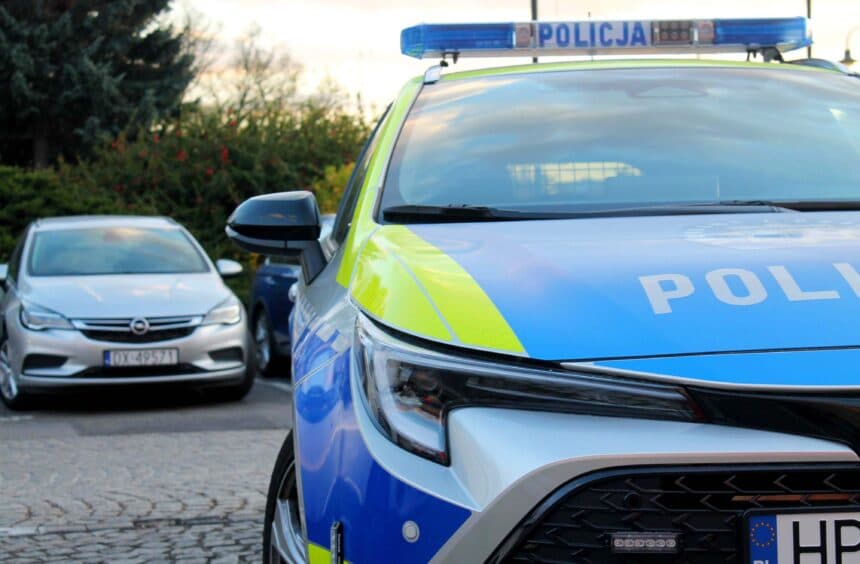
Three episodes in two days: Ostrołęka, Sierpc, Leszczydół-Nowiny. Then came the rumours of a "Bloody Friday", passed around on TikTok, Discord and WhatsApp. The police say no organised challenge exists. I believe them. But look at what the rumour achieved by itself. Schools in Wyszków shut. Others, in Mińsk Mazowiecki, Pułtusk and Legionowo, went remote or closed in part. Parents kept children home. Not a single blade was drawn on Friday, and the machinery of the state was still thrown into disarray. Tusk's government and the opposition spent the day arguing about who was in charge.
Disruption without a perpetrator is the cheapest weapon there is.
The Ukrainian mirror
Anyone who has followed the war in Ukraine knows this playbook. Since 2022, Russian services have recruited teenagers through Telegram, often for pocket money. The first jobs look like nothing: photograph a checkpoint, spray a slogan. Then comes arson at a railway relay box or a military enlistment office, then a car set alight. Ukrainian investigators call these children "disposable agents", used once and thrown away. Some were told they were taking part in a game or a quest. Some only learned who stood behind the messages after the handcuffs went on.
Poland has seen the adult version of the same model. The fire at the Marywilska shopping centre in Warszawa and a string of sabotage cases were traced to people recruited online, with little training and no loyalty, expendable by design. Lithuania, as Kaczyński pointed out, has reported its own incidents.
Where the analogy holds, and where it breaks
Let me be precise, because sloppiness helps the Kremlin as much as silence does.
In Ukraine the teenagers are tasked and paid. There is a handler, a target and a transfer. Nothing in the Mazowsze attacks looks like that. They look like what criminologists call copycat violence: a subculture that worships earlier killers, rewards live-streaming and feeds on isolation. The student in Ostrołęka with a crude explosive and the boy with the camera belong to that world, and it was not built in Moscow. It grew out of American school-shooter fandoms, true-crime forums and gaming communities.
But here is the uncomfortable part. A state that wants to hurt Poland does not need to invent this ecosystem. It only needs to feed it. Amplify the videos. Seed the "Bloody Friday" rumour. Push Polish-language accounts that glorify the attackers. Russian outlets have done exactly this with other European crises, and the tone of the "challenge" posts, many reportedly posted from abroad, fits that pattern. Russia's role, if there is one, is probably not that of puppeteer but of arsonist in a dry forest. It doesn't light every fire. It fans the ones already burning and makes sure everyone sees the smoke.