

Fuel for the Fire, Votes for the Ballot Box
My grandmother used to say that you can tell what a man truly values by what he is willing to trade when the bill comes due. She was talking about a neighbour who sold his father’s watch to pay for a wedding, but I have thought of her a good deal this week. On 9 October the President of the United States announced an arrangement with Vladimir Putin to let Russian diesel flow, and the reason given was the price at the American pump.
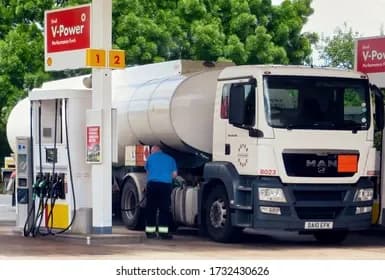
The first shipment is modest: over 300,000 tonnes, roughly 2.25 million barrels. Washington has temporarily waived the sanctions that were imposed because of the war against Ukraine. The pump price in question, an average of about $6.28 a gallon on 8 October, is the kind of number that makes a lorry driver in Ohio and a farmer in Iowa stop thinking about geopolitics and start thinking about Friday. But set the figures side by side and the arithmetic is almost comic. America exports around 1.5 million barrels of diesel a day. Analysts doubt that this cargo will move the price at the pump by more than a whisper. So the sanction has been loosened, and the pump will hardly notice.
Kyiv noticed at once. President Zelensky called it the weak move of a strong partner, and argued that every extra dollar Moscow earns from fuel exports is a dollar for the war. Nobody knows the exact sum this deal will add to the Russian budget, and it hardly matters. The point is the signal. He was also stung by the timing: the announcement landed while his delegation was sitting at the table in Miami with Americans, French, Germans, British, and officials from the European Commission and NATO. They spoke of security guarantees, of getting through the winter, of protecting power plants, of grain, of rebuilding. Constructive, said the American envoy. And yet no signed paper, no new ceasefire mechanism. You may call that diplomacy. You may also call it a conversation held in a house whose neighbour is quietly selling the matches.
Meanwhile, Moscow offers its own reading. According to the Kremlin, Putin told Trump that Ukrainian drone attacks during Russian parliamentary elections made it harder to resume three-way talks right away. That is the Russian version of events, and it arrives with the usual habit of presenting the aggressor’s obstacles as the victim’s fault. On the ground, Russian guided bombs hit a residential building in Zaporizhzhia overnight, and local officials reported four dead and four wounded. The war does not pause for the ink to dry on a fuel licence.
Why would a government do this? Look at the home front. The University of Michigan’s consumer sentiment index has fallen for the third month running, to 46.3. A fresh Reuters/Ipsos poll found that 78% of Americans blame the administration’s policies, at least in part, for the rising cost of living. Even among Republicans, 57% say prices are climbing faster than their incomes. The midterms are on 3 November. Politicians have always been skilled at hearing the thing that is loudest, and in October it is the sound of an empty wallet. So the administration is trying to cool two fires with one bucket: the cost of living at home, and the pursuit of a deal with Moscow abroad. The bucket has a hole in it.