

The Diesel Paradox
Joseph Heller gave us Catch-22, a rule so perfectly circular that the only way out was never to need one. Washington has now written its own version. Ukraine is told to stop hitting the refineries that feed the Russian war machine, because the diesel from those refineries is making American trucks more expensive to run. On 10 October Donald Trump said publicly that Ukraine should change its president, and he demanded an end to the strikes on Russian oil plants. The day before, his administration had announced an arrangement with Vladimir Putin to increase Russian diesel supplies and had temporarily eased the related sanctions. Volodymyr Zelensky sees it the other way round: every barrel freed from restrictions is a shell Russia can afford to fire.
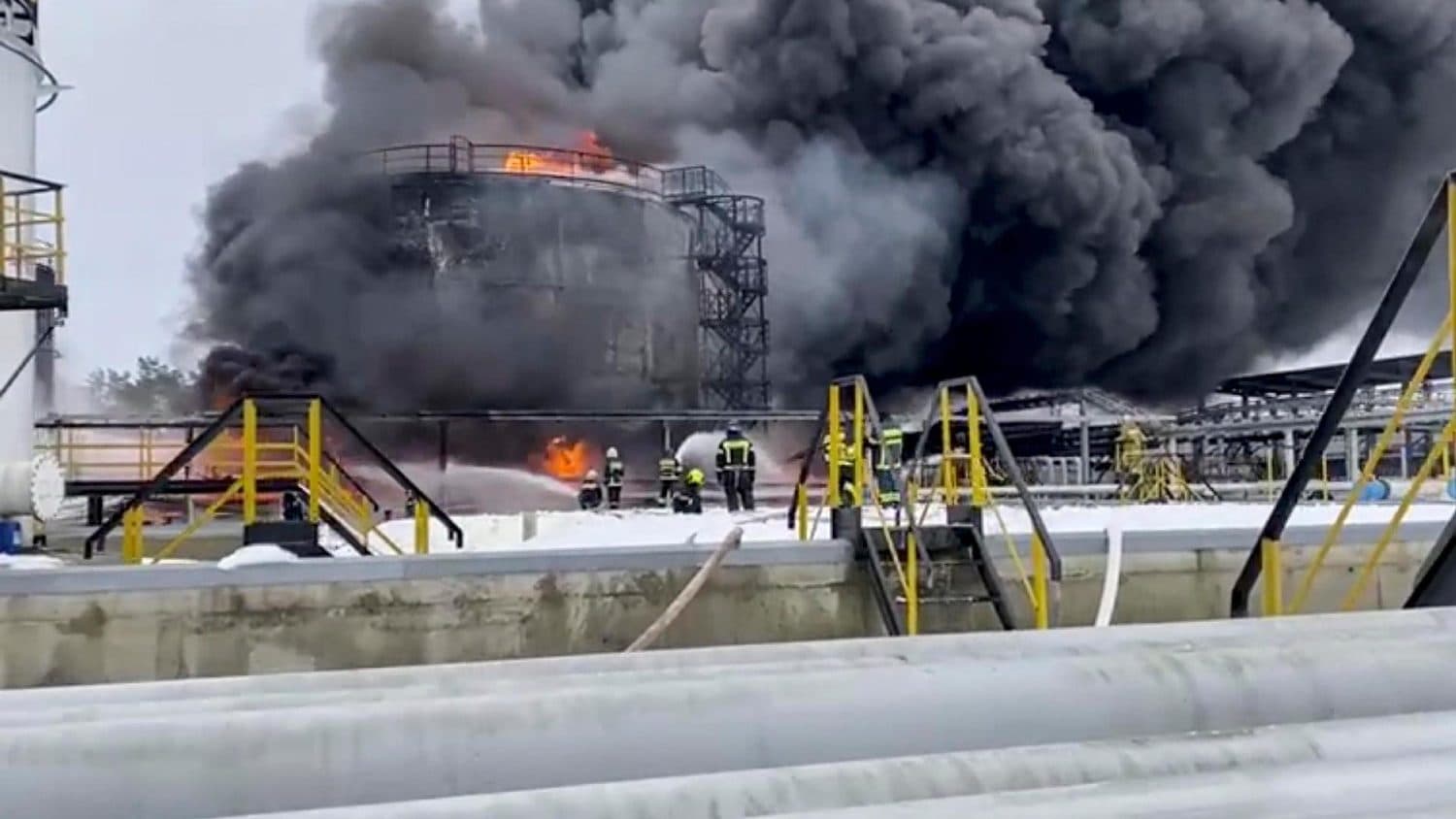
Whether Ukrainian drones really set the global diesel price is another matter. The market is also jostled by the war with Iran, snarled shipping lanes and refining bottlenecks. But politics rarely waits for the arithmetic. A farmer in Iowa and a trucker in Ohio feel the pump price today, and Kyiv’s front line feels very far away.
What matters is that the split is no longer whispered about in think-tank corridors. Berlin said on the same day that it will keep its sanctions and keep working with European partners on new ones. London signalled the same. Two halves of the West are now telling the world, out loud, that they want different things.
Meanwhile the talks go on without going anywhere. Delegations met in Miami, and TASS reports that Witkoff and Kushner may fly to Moscow within two weeks. Moscow still wants territory. Kyiv will not hand over what the occupier holds, and it wants real security guarantees. Talking, in other words, is not the same as agreeing.
And the war doesn’t pause for diplomacy. A Russian strike on residential Zaporizhzhia killed twenty people, three of them children. East of Sloviansk and Kramatorsk, Ukrainian counterattacks along the Siverskyi Donets have complicated Russian plans, though nobody should mistake a local success for a turning point. The fight has also moved into new places: refineries on one side, power grids on the other, and now data centres.
So what does all this carry beyond the headlines? For the world, it is a lesson that sanctions are only as strong as the weakest government’s electoral calendar. A coalition that bends the moment fuel gets expensive is not much of a coalition. For the ordinary person, from Kyiv to Kansas, the connection is brutally direct: the price of diesel, the price of bread and the length of the war are tied into one knot. For society at large, the question is whether Europe is ready to carry what America sets down. The sign to watch in the coming week is not another speech. It is whether anything changes in American military aid or intelligence sharing. Words are cheap. Satellite data is not.