

The Price of a Narrow Sea
I have a habit I’m not proud of. When the news turns to war, my eyes glaze over at the maps and the generals, and I find myself staring at the petrol-station sign instead. Those glowing numbers are the most honest war correspondents we have. They don’t spin. They simply go up.
This week they went up again. On 8 October oil jumped on fresh threats to shipping near the Strait of Hormuz. By the next morning, after Donald Trump said Washington has no plans for new strikes on Iran before the November elections, the market exhaled. Around 06:50 Warsaw time, Reuters had Brent at roughly $102.91 a barrel and WTI at $90.40. Note the word “around”. These are a snapshot, not a verdict. The whole drama of the global economy is that a single sentence from a single politician can shave a few dollars off the price of the thing that moves your bread, your bus and your boiler.
Think about how war actually reaches your wallet. It rarely arrives with a bang. It comes through the side door, in four disguises. Supply is squeezed. Freight, insurance and the cost of financing trade all swell. Uncertainty makes firms sit on their investments, or hoard stock, which is its own kind of fever. And governments, frightened, pour money into defence. Each of these is a small tax, levied without a vote.
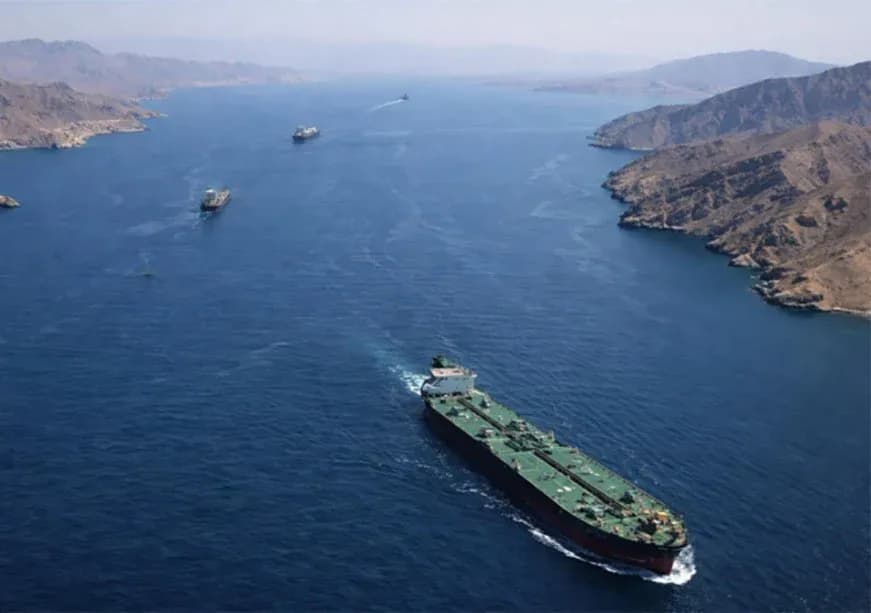
Before the fighting, a fifth of the world’s oil and fuel flowed through that one narrow channel. A fifth of the planet’s lifeblood through a pipe you could almost swim across. If that doesn’t strike you as a design flaw in our civilisation, I’m not sure what would.
Now, the temptation is to read this morning’s dip as the beginning of the end. Resist it. There is no confirmed agreement. Iran is weighing American proposals, and the quarrel over its nuclear programme hasn’t gone away. What the market is pricing is hope, not delivery. Hope is cheap, and it can be repriced before lunch.
Nor is it only about war, which is what makes the picture so tangled. Hurricane Isaias has shut in about 1.3 million barrels a day in the Gulf of Mexico. Shocks, like misfortunes, rarely come single-file. They hold hands.
The cavalry is on its way, of course. The International Energy Agency has agreed to speed up the release of stockpiled oil, with diesel first in the queue, and China is preparing to restart fuel exports after its holiday lull, with industry sources putting approved October volumes of petrol, diesel and jet fuel at about 3.7 million tonnes. That figure comes from traders, not from Beijing’s official books. Helpful, yes. But emergency reserves are a plaster, not a limb. You cannot run an economy on a stockpile any more than you can live on your savings forever. And China’s relief will be modest while Middle Eastern supply remains tangled.
Here is where I’d urge you to look beyond the ticker. On 6 October the IMF warned that repeated spikes in food and energy prices can lodge in people’s expectations for a long time. That is the cruellest part. A poor household spends most of its income on things it cannot skip: food, heat, getting to work. For them a price shock is not a headline, it’s a hole in the month. And once people expect prices to keep leaping, they demand higher wages, firms raise prices to pay them, and the loop tightens. The crisis outlives the cause.